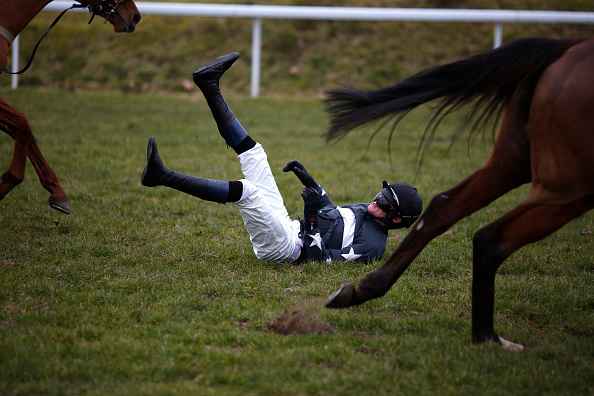
A day in the life at Tokyo Racecourse on Japan Cup weekend.
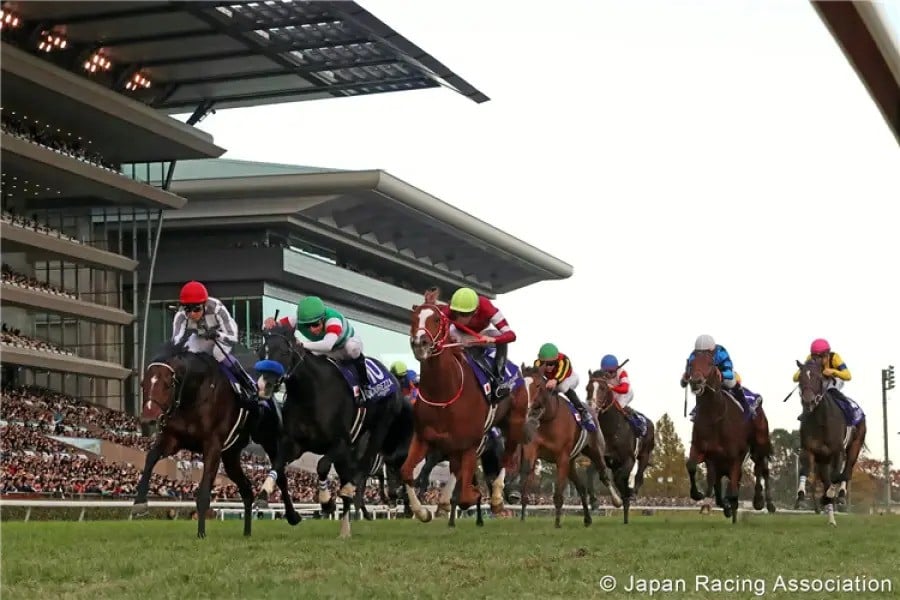
It didn't take long for me to realise that I had severely underestimated the vast size and stature of Tokyo Racecourse. Take the grandstand at Cheltenham or Longchamp for example and maybe times it by three or four. It is therefore no wonder it holds the Guinness World Record for the largest horse racecourse by spectator capacity, accommodating up to 223,000 people.
We missed the first race due to the customary Tokyo traffic but after getting settled into the foreign press room on floor eight, guide Miwa wasted little time in gathering up the troops for a tour of the parade ring.
A facile seven-length success in race four from the man that is tasked with steering Calandagan to victory in tomorrow's feature meant that members of the French press were keen to visit the winners' circle for some potential photograph opportunities. I duly tagged along and by I'm glad I did.
When it comes to reporting and the media in Japan, things are certainly completely different. A quick trip down to the weighing room with a colleague to potentially collar Tom Marquand and Damian Lane resulted in a small slap on the wrist, and it was at this moment that I learnt that jockeys enter something of a "jockey quarantine" when racing in Japan. There are no huddles or TV interviews in the winners' circle, just countless pictures and autographs signed with fans.
Barzalona must have signed at least 50 pieces of merchandise from fans hanging over the rail following his victory in race four and it's moments like that, that make you truly realise just how passionate this nation is when it comes to racing.
There's a 50-minute break between races four and five for a quick bite to eat or drink, not something that I think would catch on during a six-race card at Southwell on a Wednesday evening but then again, this isn't Southwell. This is Tokyo on Japan Cup weekend.
The signing of autographs finally stopped but only because Barzalona was required to take a step back to allow for the ceremony of jockey Norihiro Yokoyama to begin. Aged 57, Yokoyama is the oldest jockey to win at Grade 1 level in Japan, and it didn't take long to realise that he had the utmost respect from those around him. Fans were silent and jockeys gathered to show their appreciation as Yokoyama, who was dressed in a traditional tailcoat, collected his medal with yellow ribbon.
A trip to the gift shop was next on the tour and it came as no surprise that there was a queue to get in. The store was perhaps slightly smaller than I expected, especially
considering the size of the place, but they hadn't really missed a trick when it came to merchandise as pretty much everything and anything was on offer.
It was at this point that I broke away from the tour with Miwa and allowed those around me to continue their shopping spree. After successfully navigating my way back to the press room to actually produce some work, it was time for lunch. There was an excellent spread on display in the press room which I duly sampled but I was also keen to look at what else was on offer to the public. The answer to that is basically everything and anything. There must have been at least 100 food places situated across the multiple floors and stands, all offering the traditional Japanese classics. I opted for the classic Chicken Katsu Curry which set me back about 800¥ with a drink. That's less than £4.
It was time to figure out how to use the betting terminals and after some help from a friendly fellow punter whose English was much stronger than my Japanese, I was away. We were onto race eight by now and following a quick glance at my English form guide I opted for the Japanese champion, Frenchman Christophe Lemaire. He didn't disappoint and thanks to a well-judged ride, Vanargand came home a neck in front. I left race nine alone due to the short-price favourite and following a losing bet in race ten, decided Damian Lane was the man to be on in the penultimate contest. The Aussie looked to be in a bit of bother in the straight but weaved his way through rivals to produce Mikki Gorgeous in front by a slender margin.
With a few extra Japanese Yen in my pocket, it was time for a drink with a mutual friend and his pal who have both been travelling Japan for a few months. Three beers for a very reasonable 1800¥. That's less than £9 which would only just about get you one pint at most courses in England and wouldn't even go close for a draft stellar at the Breeders' Cup in Del Mar. The lads also revealed that entry cost them a grand total of 200¥. You'd get change from a pound. Excellent value.
Showing morning trackwork on the screen between races really caught the eye, as did the small rooms that were dotted about the racecourse to teach so called 'newbies' how to read the racecourse form guide. Both excellent features that offer plenty of value to new and regular customers.
Horses exercising at the local Miho training centre wasn't the only thing being shown between races, with Japan Cup advertisement and race replays prevalent across screens almost everywhere you look. This race really is a big deal over here and while I understand things are slightly different in Europe with multiple Group/Grade 1's staged on one card, it does beg the question as to what we could do differently.
Despite giving myself a good few hours to explore the track I came away not only wondering if I'd only just scratched the surface but with a newfound excitement for tomorrow's race. It seems odd to be so solely focused on one race throughout a twelve-
race programme, but I guess that's what makes the build-up so focused and intense. We could be about to experience something great tomorrow. Can Calandagan end Europe's baron spell in Japan's greatest turf race, will the home contingent continue their domination, and could Christophe Lemaire join the great Yutaka Take as a five-time winning Japan Cup rider. The scene is set, bring on the 45th Japan Cup.